Your Wallet Is Already Obsolete — You Just Haven't Noticed
Somewhere along the way, the question changed. It used to be "do you use a digital wallet?" Now it's "which one?" Digital wallets crossed into the mainstream quietly: roughly 69 percent of US adults used one in the past 30 days according to recent industry research, and globally about 4.5 billion people — more than half the planet — now pay with their phones. In-store mobile wallet use in the US has climbed steadily since 2022, and proximity mobile payments are on pace to top $1 trillion annually by 2027.
But "digital wallet" in 2026 means much more than tap-to-pay. Your phone now wants to hold your driver's license, your car keys, your transit pass, your concert tickets, and your insurance card. The wallet wars have become ecosystem wars — so let's figure out which one actually deserves your cards.
How Digital Wallets Keep Your Card Number Secret
Before comparing apps, it's worth understanding the security model they share, because it's genuinely better than the plastic in your pocket.
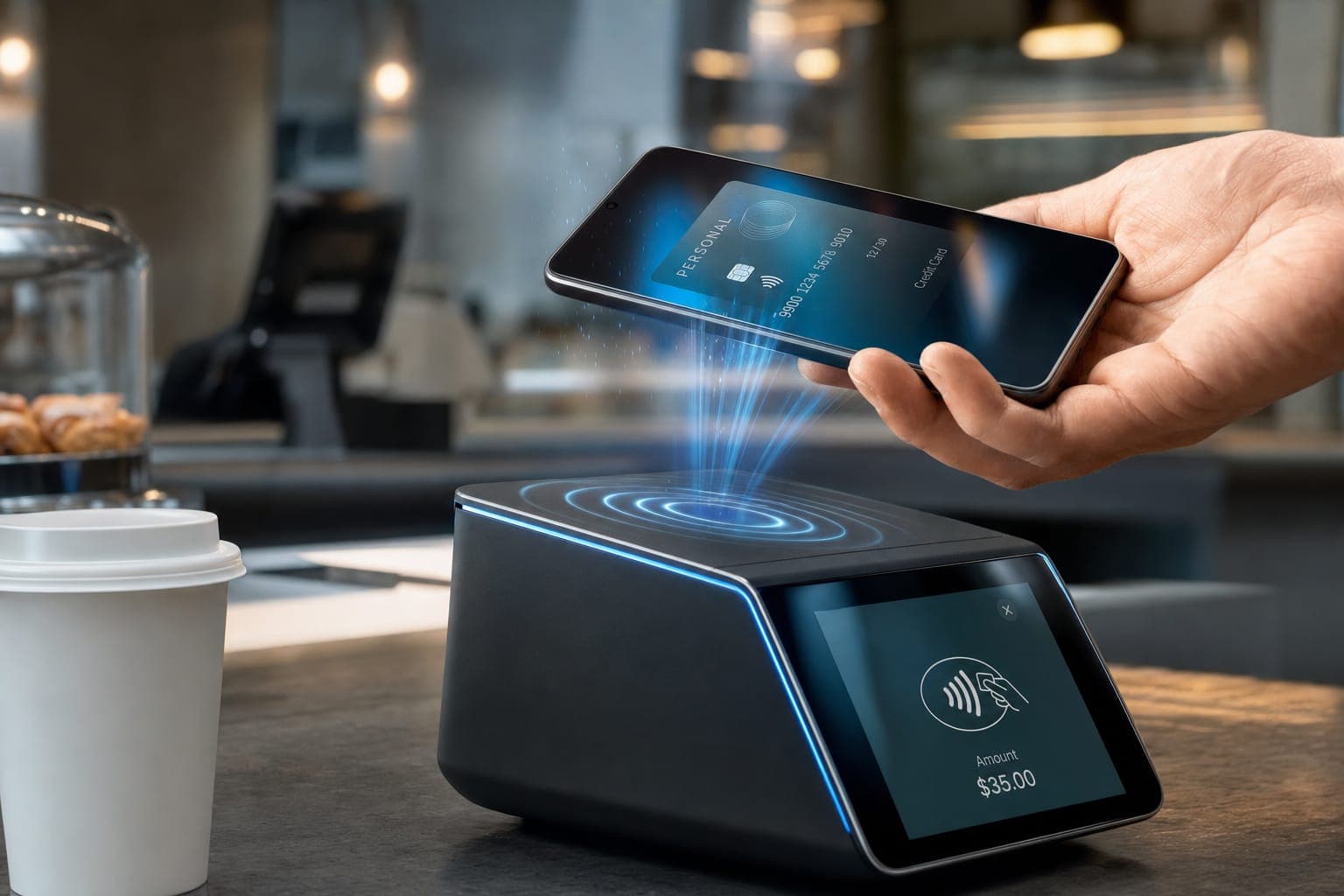
When you add a card to Apple Pay, Google Wallet, or Samsung Wallet, the wallet never stores your actual card number. Instead, the card network issues a token — a device-specific stand-in number — and that's what gets transmitted at the register, along with a one-time cryptographic code for each transaction. On iPhones, the token lives in a dedicated Secure Element chip; Google pairs tokenization with cloud-based protections and Android's hardware-backed keystore.
The practical upshot:
- A merchant breach can't leak your real card number, because the merchant never sees it.
- A stolen token from one device is useless on another.
- Every transaction requires biometric or PIN confirmation, so a stolen phone isn't a stolen wallet.
That biometric layer matters more than people realize — it ties every payment to your face or fingerprint rather than a signature nobody checks. We've covered why that's a meaningful upgrade in Biometrics: Keep Your Identity Secure. The short version: tapping your phone is significantly safer than swiping, inserting, or reading your card number aloud over the phone.
The weak points, to be fair, sit at the edges of the system rather than its core. Fraudsters have shifted to provisioning attacks — tricking victims or banks into adding a stolen card to the fraudster's own wallet — and to old-fashioned shoulder surfing of phone passcodes, which can unlock everything behind them. The defenses are equally unglamorous: use biometrics rather than a guessable PIN, never read a one-time code to anyone who calls you, and turn on your bank's transaction alerts. The cryptography is doing its job; the remaining risk is mostly social.
Apple Pay and Wallet: The Walled Garden at Its Best
Apple Pay remains the default answer for anyone with an iPhone, and in 2026 it's less a payment feature than an identity platform. It works across iPhone, Apple Watch, iPad, and Mac, and acceptance is effectively universal — the overwhelming majority of US retailers now take it.
Where Apple has pulled ahead is everything that isn't a credit card:
- Digital IDs. You can add a driver's license or state ID to Apple Wallet in more than a dozen states plus Puerto Rico, with additional states announced for 2026.
- Car keys. BMW, Hyundai, Kia, Genesis, and others let you unlock and start the car from your iPhone or Watch, with ultra-wideband so the phone can stay in your pocket.
- Transit. Express Mode rides through systems from New York's OMNY to Tokyo's Suica without unlocking your phone — even, for a few hours, with a dead battery.
- Tap to Cash and tap-to-pay on iPhone turn any two iPhones into a payment terminal and a peer-to-peer transfer, no hardware needed.
One genuinely new dynamic: regulators pried open the iPhone's NFC chip, so in many regions banks and third-party apps can now offer their own tap-to-pay on iOS. In practice, almost nobody switches — defaults are destiny — but the walled garden now has a gate.
The catch is the obvious one: none of this leaves the Apple ecosystem. Your wallet is only as portable as your loyalty to the iPhone.
Google Wallet: The Flexible Favorite
Google Wallet runs on virtually any NFC-equipped Android phone and on Wear OS watches, which makes it the most broadly available wallet on Earth. Feature-for-feature it now matches Apple nearly point for point: tokenized payments, transit cards, loyalty programs, car keys for a growing list of manufacturers, and state IDs that work at over 250 TSA checkpoints alongside Apple's.
Google's standout move is pragmatism. The "everything else" feature lets you photograph essentially any pass or document — a gym card, a library card, an insurance card — and Wallet will digitize it, barcode and all. Apple has nothing quite as flexible. Google has also pushed digital IDs beyond Wallet itself, accepting them for things like account verification and age checks online.
The trade-off is fragmentation. Experience varies by phone maker, by bank, and by country, and Google's habit of rebranding its payment products (Android Pay, Google Pay, GPay, Google Wallet) has cost it consumer mindshare that Apple never squandered. As one detailed comparison from Android Authority notes, the right choice on Android often comes down to which phone you own — which brings us to Samsung.
Samsung Wallet, PayPal, Venmo, and the Bank Apps
Samsung Wallet is the best argument for not defaulting to Google on a Galaxy phone. It merged Samsung Pay and Samsung Pass into one app that holds payments, IDs, passwords, and digital keys, and it's woven deeper into Galaxy hardware than Google Wallet can be. Samsung has also leaned into travel, bundling boarding passes, tickets, and reservations into organized trip views. Its one historical superpower — MST, which let phones mimic a magnetic stripe swipe at old terminals — is long retired, but contactless acceptance is now broad enough that nobody misses it.
PayPal and Venmo dominate a different layer: person-to-person and online checkout. PayPal's roughly 430 million active accounts make it the default guest-checkout button across the web, and Venmo remains the verb for splitting dinner in the US. Both now offer debit cards and in-store tap-to-pay, but neither is anyone's primary in-store wallet — they're the money-moving layer, not the phone-tapping layer. If you shop online constantly, pairing one of them with solid habits from our guide to smarter online shopping covers most of your bases.
Bank apps and Zelle round out the field. Zelle moved over $1 trillion in 2024, the most of any P2P service, precisely because it lives inside the banking apps people already trust. Banks would love to own the whole wallet — some regional consortium efforts like Paze are trying — but so far they've conceded the register to the phone makers. And that's before accounting for cryptocurrency, a parallel rethink of money we cover in Blockchain Boom: Crypto Craze.
Digital Wallets Beyond Payments: IDs, Keys, and Transit
The most important 2026 story isn't payments at all — it's everything else migrating into the wallet.
Digital driver's licenses have moved from novelty to genuinely useful. The TSA accepts mobile IDs from participating states at hundreds of checkpoints (you still must carry your physical ID as backup), and states keep joining each quarter. Age verification at retailers and venues is starting to accept them too, with a privacy bonus: a digital ID can confirm you're over 21 without revealing your address or exact birthdate — something a plastic license can't do.
Hotel room keys, office badges, student IDs, and car keys are following the same path. The pattern is consistent: each physical credential that moves into the wallet is one less thing to lose, and one more thing locked behind your biometrics. The remaining friction is acceptance, not technology — fewer than 60 percent of US small businesses take digital wallets at all, and a digital ID still won't get you through every checkpoint or bar door. The sensible 2026 posture is phone-first, plastic-as-backup. It also raises the stakes of your phone's security posture — your passcode now guards your money and your identity, which is why it pairs naturally with the credential hygiene we discuss in Password Managers in 2026: Are They Still Necessary?.
The privacy considerations are real but manageable. Apple processes payments on-device and doesn't keep transaction histories tied to you; Google's wallet data sits inside the broader Google account ecosystem, and while payment details aren't used for ad targeting, more of your activity touches Google's cloud. If data minimization is your priority, Apple's architecture is the more conservative choice. If flexibility wins, Google's is the more capable one.
Head to Head: Which Wallet Wins for Whom
| Feature | Apple Pay / Wallet | Google Wallet | Samsung Wallet | PayPal / Venmo |
|---|---|---|---|---|
| Devices | iPhone, Watch, iPad, Mac | Most Android, Wear OS | Samsung Galaxy | Any (app-based) |
| In-store tap-to-pay | Excellent | Excellent | Excellent | Limited |
| Digital driver's license | Yes, expanding states | Yes, expanding states | Yes, select states | No |
| Car keys | Yes (UWB + NFC) | Yes (growing list) | Yes (Galaxy-first) | No |
| Transit cards | Yes, Express Mode | Yes | Yes | No |
| P2P payments | Apple Cash, Tap to Cash | Google Pay balance | Samsung Pay Cash | Best in class |
| Store-anything passes | Limited | Yes, any barcode/doc | Yes | No |
| Privacy posture | Strongest (on-device) | Good, cloud-tied | Good | Transaction data retained |
The honest verdict:
- iPhone owner? Apple Pay, full stop. The integration depth and privacy model are unmatched.
- Galaxy owner? Samsung Wallet first, Google Wallet as the fallback for anything Samsung doesn't cover.
- Any other Android? Google Wallet, which is now within arm's reach of Apple on features.
- Heavy online shopper or bill-splitter? Layer PayPal or Venmo on top of whichever tap-to-pay wallet matches your phone.
The Takeaway
The digital wallet race no longer has a single winner — it has a winner per ecosystem, and the real loser is the leather one in your pocket. Payments are solved; the 2026 battleground is identity, keys, and credentials, where Apple currently leads on polish and privacy while Google leads on reach and flexibility.
The key takeaway: pick the wallet native to your phone, load it beyond payments — ID, transit, keys, loyalty — and protect the device like the vault it has become. Tokenization already made your phone safer than your plastic. The sooner you treat it as your primary wallet rather than a backup, the sooner you get the benefits the technology has quietly been delivering for years.