The Implant Era Has Quietly Arrived
Two years ago, a brain implant that let a paralyzed person play chess with their thoughts sounded like a one-off demo. Today, brain-computer interfaces have crossed from stunt to study: as of early 2026, Neuralink reports 21 participants in its human trials worldwide, up from 12 just months earlier, and the company says it has logged zero serious device-related adverse events so far. Meanwhile, at least three serious competitors are running their own human trials, and one is preparing the pivotal study that could lead to the first FDA-approved implantable BCI.
That's a remarkable amount of progress for a field that, until recently, lived almost entirely in university labs. But it's also a field where the gap between what's real and what's promised remains enormous. Let's separate the two.
Where Brain-Computer Interfaces Stand in 2026
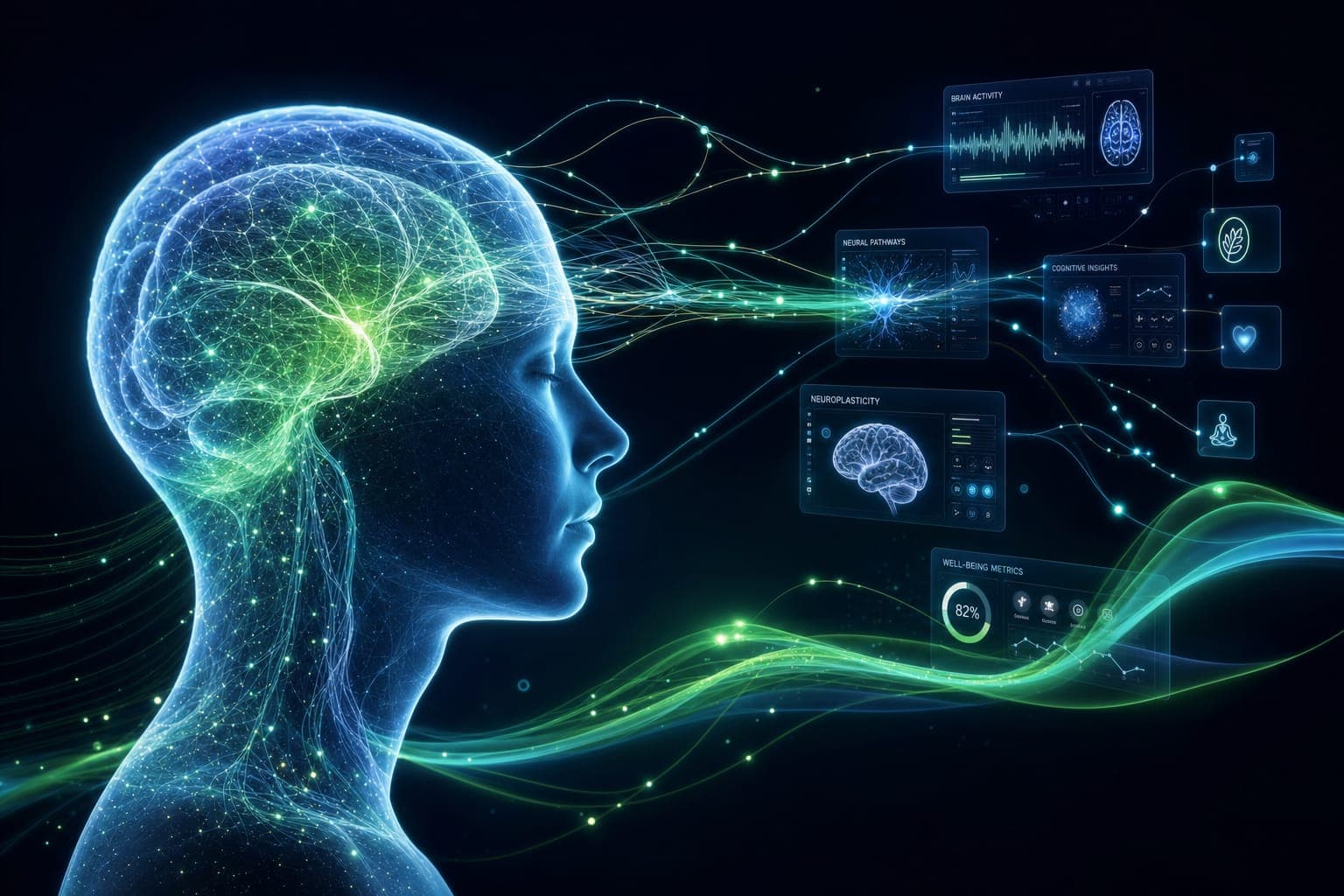
The basic idea behind a BCI is simple to state and brutally hard to execute: record electrical activity from neurons, decode the user's intent with machine learning, and translate it into action — moving a cursor, typing text, controlling a robotic arm.
Neuralink remains the most visible player. Its N1 implant, branded Telepathy, uses flexible threads carrying over 1,000 electrodes, sewn into the motor cortex by a surgical robot. The company's first participant, Noland Arbaugh, received his implant in January 2024 and has now used it daily for more than two years to browse, game, and post online. In late 2025, Neuralink expanded internationally: seven patients received implants in the UK as part of the GB-PRIME study between October and December.
Then there's Synchron, the tortoise to Neuralink's hare — and arguably the company closest to a commercial product. Its Stentrode device threads through blood vessels into position near the motor cortex, no open-brain surgery required. Synchron's COMMAND trial met its primary safety endpoint with no serious device-related adverse events, the company raised $200 million in late 2025 from backers including Jeff Bezos and Bill Gates, and it's preparing a pivotal trial this year — the final step before seeking full FDA approval. Synchron has also been working with Apple to make brain signals a native input method for iPhones and the Vision Pro.
Two more names round out the field:
- Precision Neuroscience, founded by a Neuralink co-founder, builds a film thinner than a human hair that drapes 1,024 electrodes over the brain's surface without penetrating it. Its Layer 7 Cortical Interface received FDA 510(k) clearance in April 2025 for implants of up to 30 days — a first for this class of device.
- Blackrock Neurotech, the field's elder statesman, has been implanting its Utah array in research participants since 2004. More people have lived with Blackrock electrodes than any other BCI, some for the better part of a decade.
Medicine First: Paralysis, ALS, and Lost Speech
Every credible company in this space is targeting medical use first, and for good reason — that's where the need is urgent and the regulatory path is clear.
For people with spinal cord injuries, a BCI restores digital agency: cursor control, typing, smart-home commands. For people with ALS, the stakes are even higher. The disease progressively steals movement and speech while leaving the mind intact, and BCIs offer a way to communicate that doesn't depend on failing muscles. Academic teams have demonstrated speech neuroprostheses that decode attempted speech at conversational rates, with one ALS participant achieving word accuracy above 95 percent in published research — figures that would have been science fiction five years ago.
This medical-first framing matters when you hear the word "enhancement." The honest version of this technology in 2026 is not a memory chip for healthy people. It's a lifeline for people locked out of their own bodies — closer in spirit to the role AI already plays in surgical procedures than to anything from a cyberpunk novel.
How the Technology Actually Works
Strip away the branding and every BCI is making the same three-way trade between signal quality, invasiveness, and longevity.
Recording. Electrodes pick up the electrical chatter of neurons. Penetrating electrodes (Neuralink, Blackrock) sit among the neurons themselves and capture the sharpest signals. Surface arrays (Precision) and endovascular stents (Synchron) record from farther away — weaker signals, but far less risk to brain tissue.
Decoding. Raw neural data is noise until machine learning makes it meaning. Decoder models are trained on each individual user: think about moving your hand, the system watches what your neurons do, and over days it learns the mapping. Modern decoders adapt continuously, because neural signals drift over time.
Output. Decoded intent becomes a cursor movement, a synthesized voice, a wheelchair command. Bandwidth is the field's defining constraint — today's best systems transmit a few dozen "words" worth of intent per minute, not the torrent of thought the hype implies.
The hard engineering problems are mundane and stubborn: electrodes degrade, the brain's immune response slowly walls off implants, and wireless power and data must work for years inside the skull. Progress on all three is real but incremental.
It's also worth understanding what these devices cannot do, because the misconceptions run deep. A motor-cortex implant cannot read your inner monologue, your memories, or your emotions — it records activity from a patch of brain tissue the size of a coin, in a region the user is deliberately driving. Decoding attempted speech requires electrodes placed over speech-motor areas and a willing, trained participant. There is no general-purpose "mind reading" anywhere on the horizon, and the physics of recording through the skull means non-invasive devices face even harder limits. The realistic frontier is bandwidth and reliability, not telepathy.
The Ethics Question Nobody Gets to Skip
Brain-computer interfaces generate the most intimate data that has ever existed: a direct readout of neural activity. That raises questions that current privacy law was never built to answer.
Who owns your neural data? Can it be subpoenaed? Can an employer or insurer ever ask for it? Researchers and ethicists have been pushing "neurorights" frameworks for years — Chile amended its constitution to protect neural data back in 2021, and US states including Colorado and California have since passed laws extending privacy protections to neural information. But as a recent review in IBRO Neuroscience Reports argues, commercialization is outpacing the ethical and regulatory frameworks meant to govern it.
There are nearer-term concerns, too:
- Surgical risk. Even with robotic precision, implanting hardware in a brain carries infection and bleeding risks that must be weighed against benefits.
- Abandonment. What happens to patients if their implant maker goes bankrupt? It has happened before in neurotech, leaving people with unsupported hardware in their heads.
- Equity. If BCIs ever do enhance healthy users, access will initially track wealth — a familiar problem with a uniquely personal twist.
These debates echo the ones society is already having about AI ethics and regulation, with one key difference: you can log off an algorithm. You can't log off an implant.
Realistic Timelines: Three Scenarios
Anyone who gives you a confident date for consumer brain implants is selling something. But we can sketch scenarios grounded in how medical devices actually move through the world.
The base case (most likely). A first implantable BCI wins FDA approval for severe paralysis within the next two to four years — Synchron's pivotal trial is the one to watch. Through the late 2020s, BCIs remain specialist medical devices measured in the thousands of patients, with steadily improving bandwidth and reliability. Enhancement for healthy users stays off the table.
The acceleration case. Decoder AI improves faster than expected, surgical robots drive implant costs down sharply, and by the early 2030s less-invasive devices (endovascular or surface arrays) reach tens of thousands of patients, expanding into depression, epilepsy, and stroke rehabilitation. Late in the decade, the first elective implants for non-medical use appear in permissive jurisdictions — and force the regulatory fight everyone has been deferring.
The disappointment case. Long-term electrode degradation or a serious adverse event in a high-profile trial triggers regulatory caution. The field doesn't die — the medical need is too real — but timelines slip by a decade, and the BCI market's projected growth from roughly $3 billion today flattens considerably.
The honest position is that we don't know which scenario we're in. The encouraging sign is that the field's safety record so far — across Neuralink, Synchron, Precision, and decades of Blackrock implants — has been better than skeptics feared.
A few concrete milestones will signal which path we're on. Watch for Synchron's pivotal trial enrollment and results, since that's the nearest gate to a commercial product. Watch whether Neuralink's participant count keeps compounding — going from 21 patients to a few hundred would prove the surgical robot scales. Watch for the first insurance reimbursement decisions, because a BCI nobody can afford is a BCI nobody gets. And watch the academic speech-decoding work, where accuracy gains have been fastest. Each of these is checkable within 18 months, which makes them far better forecasting tools than any CEO's stage prediction.
Brain-Computer Interfaces and the Enhancement Question
So when does "restoring function" become "enhancing humans"? The line is blurrier than it sounds. A BCI that lets a paralyzed person type at 90 words per minute is restorative. The same system in a healthy person would be enhancement. The hardware doesn't care about the distinction; only regulators and ethicists do.
For the foreseeable future, the math doesn't favor elective implants. Brain surgery for a marginal productivity gain is a terrible trade when a smartphone gets you most of the way there. Enhancement becomes plausible only when implantation risk approaches zero and bandwidth far exceeds what hands and eyes already provide — and we are nowhere near either threshold. For now, the more visible face of the human-machine future is external — humanoid robots stepping into physical labor rather than machinery placed inside us.
What's more likely is enhancement by another route: non-invasive wearables that read coarser brain signals for focus tracking, sleep, and hands-free control. They'll be far less capable than implants, but you can take them off — and that difference will matter enormously to mainstream adoption. The trajectory may resemble gene editing's, where CRISPR moved from blunt instrument to precision tool over a decade of careful iteration rather than overnight revolution.
The Takeaway
Brain-computer interfaces in 2026 are simultaneously underhyped and overhyped. Underhyped, because few people realize that dozens of humans are already living with these implants, controlling computers by thought every day, with safety records that have largely held up. Overhyped, because the leap from "cursor control for paralysis" to "human enhancement" spans decades of unsolved engineering, unwritten law, and unanswered ethics.
The key takeaway: watch the medical milestones, not the keynotes. The first FDA approval of an implantable BCI — plausibly within a few years — will tell you more about the future of this technology than any demo ever could. The companies restoring speech to ALS patients today are quietly building the foundation for whatever human enhancement eventually becomes. That work is slower than the headlines suggest, and far more real.