The Quietest Wearable Is Having Its Loudest Moment
Smartwatches shout. They buzz with notifications, demand nightly charging, and announce to every meeting that you're checking the time. Smart rings whisper — and in 2026, a lot of people are deciding they prefer the whisper. The smart ring market has matured from a single-player niche into a genuine category, with the Oura Ring 4, Samsung Galaxy Ring, and a wave of subscription-free challengers all competing for your finger.
That competition got dramatic recently. A U.S. patent ruling knocked one major player out of the American market entirely and forced another to the negotiating table. So if you're shopping for a smart ring right now, the landscape looks meaningfully different than it did even six months ago. Here's where things actually stand — and which ring deserves your money.
Why Smart Rings Beat Smartwatches for Health Tracking
First, the case for the category. A ring's superpower is that you forget it's there. At 2 to 4 grams, these devices weigh less than a house key, survive showers and swims, and run for days between charges. That makes them dramatically better sleep trackers than watches for one simple reason: people actually wear them to bed, every night, without a charging-anxiety negotiation.
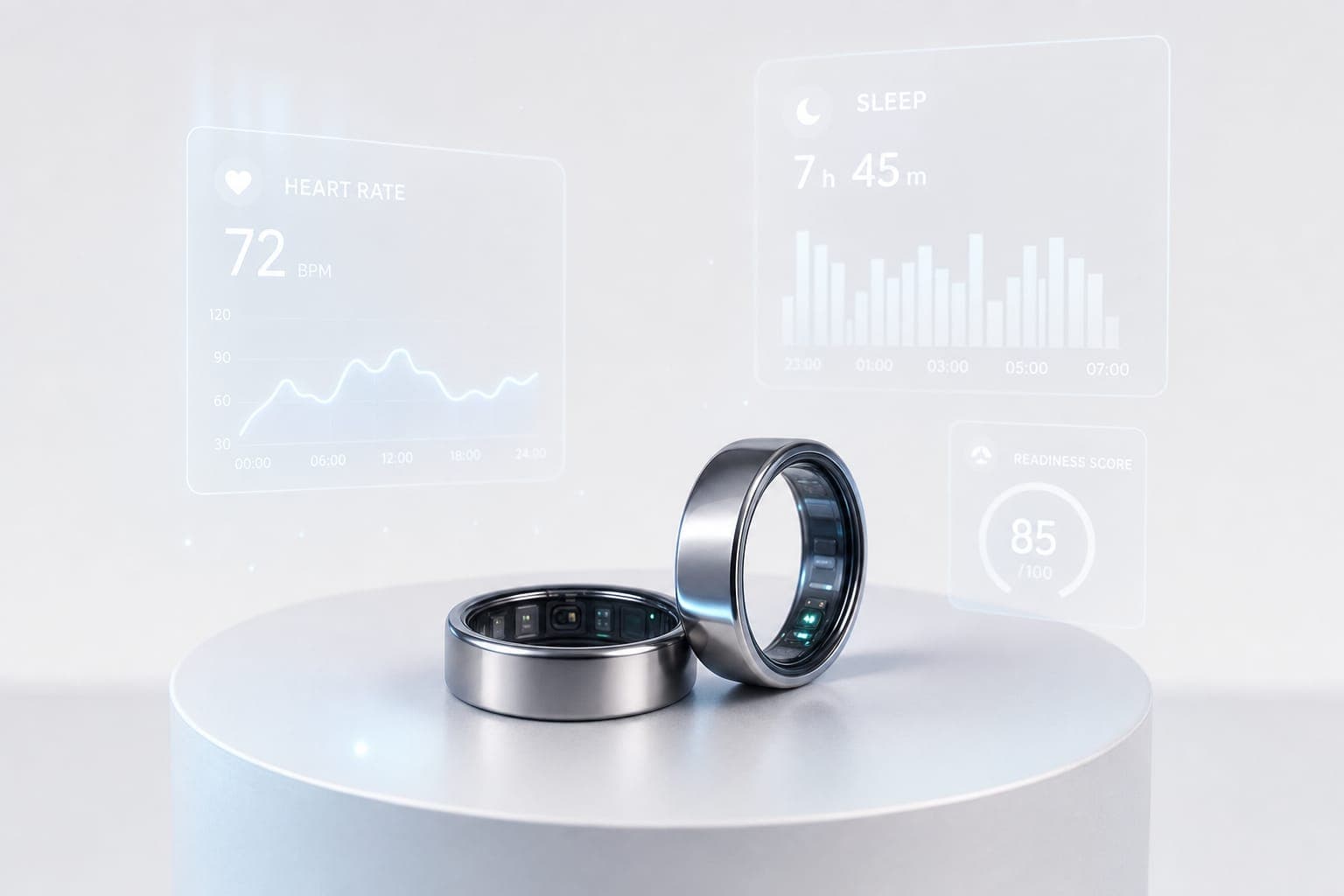
There's a physiological argument too. The finger's arteries sit close to the skin, giving optical sensors a strong signal for heart rate, heart rate variability, blood oxygen, and skin temperature. Every ring in this guide uses some version of that sensor stack to score your sleep, recovery, and daily readiness.
The trade-off is equally simple: no screen. A ring won't show notifications, guide a workout, or take a call. It's a passive health instrument, not a wrist computer — which is exactly why many people pair one with a dumb watch and call it the best of both worlds. If real-time workout feedback matters more to you than recovery data, a watch or band may still serve you better; we covered that side of the aisle in Fitness Tech: Using Wearables to Enhance Your Workout.
Oura Ring 4: Still the One to Beat
The Oura Ring 4 remains the reference point everyone else gets measured against, and mostly deserves it. The fourth-generation ring moved to a full titanium build with recessed sensors (no more pressure bumps on your finger), expanded sizing from 4 to 15, and Oura's "Smart Sensing" system, which steers signals around tattoos, knuckle position, and loose fit far better than earlier models.
The hardware is excellent, but the app is the real moat. Oura's sleep staging has held up well in independent validation studies, and the platform now layers on cardiovascular age estimates, stress tracking, cycle insights, and an AI advisor that turns raw data into plain-English guidance. It works equally well on iPhone and Android, which no other ring in this guide can fully claim.
The catch is the toll booth. The ring costs $349 to $499 depending on finish, and nearly all of its insights sit behind a $5.99 per month membership. Skip the subscription and your beautiful titanium ring shows you three bare scores and not much else. Over three years, an Oura costs roughly $565 to $715 all-in — worth knowing before you fall for the hardware.
Samsung Galaxy Ring: The No-Subscription Android Play
The Samsung Galaxy Ring is Samsung's bet that people are tired of renting their own health data. It costs $399.99 once, with every feature — Energy Score, sleep coaching, heart rate and temperature trends, cycle tracking — included forever. In the first year of ownership it's already cheaper than an Oura, and the gap widens every month after, a point reviewers at Tom's Guide keep hammering home.
It's a lovely piece of hardware: concave titanium sides, about 7 days of claimed battery (closer to 5 in real-world use, same as Oura), and a charging case that tops the ring up on the go. Inside Samsung's ecosystem it does clever tricks — pinch gestures to snap photos or silence alarms, and a roughly 30% battery extension when it hands tracking duties off to a Galaxy Watch you're also wearing.
The limitation is the fence around the garden. The Galaxy Ring requires an Android phone, and its best features assume a Samsung one. iPhone owners are simply out; Pixel owners get the core experience but lose the gesture extras. Samsung Health's insights are solid and improving, though most reviewers still rank Oura's analysis and accuracy track record a step ahead. If you're already living the Galaxy life, none of that will bother you.
RingConn and Ultrahuman: The Value Challengers, After the Earthquake
Here's where 2026 got interesting. In September 2025, the U.S. International Trade Commission ruled that both Ultrahuman and RingConn infringed Oura's patents on the smart ring's core construction, with an import ban taking effect October 21, 2025. The two companies took very different exits.
RingConn settled. It now pays Oura royalties under a multi-year license and continues selling in the U.S. legally. That matters, because the RingConn Gen 2 ($299, no subscription) is the spec-sheet bargain of the category: a 2mm-thin design, an automatic sleep apnea screening feature, and a genuinely absurd 10 to 12 days of battery life, plus a pocket charging case that stretches months between wall outlets. The budget-tier Gen 2 Air brings the entry price down to $199. The app is the weak spot — data-rich but less polished, leaving you to interpret more of the graphs yourself.
Ultrahuman didn't settle, and its Ring Air ($349, subscription-free, beloved by athletes for its recovery and circadian features) can no longer be imported or sold in the United States. The company has said it will keep supporting existing U.S. customers and is working on a redesigned ring, but as of early 2026, American buyers can't simply order one. Outside the U.S., it remains a strong Oura alternative for the fitness-obsessed.
The episode is a useful reminder that in young hardware categories, legal risk is product risk. Buying from the category leader costs more partly because you're buying certainty.
Smart Rings Compared: The 2026 Buyer's Table
Here's how the field stacks up at a glance:
| Ring | Price | Subscription | Real-World Battery | Standout Strength | Works With |
|---|---|---|---|---|---|
| Oura Ring 4 | $349–$499 | $5.99/month | 4–6 days | Best app, insights, and validation record | iPhone and Android |
| Samsung Galaxy Ring | $399.99 | None | 4–6 days | No fees, Galaxy ecosystem tricks | Android only |
| RingConn Gen 2 | $299 | None | 10–12 days | Battery life, sleep apnea screening | iPhone and Android |
| RingConn Gen 2 Air | $199 | None | 8–10 days | Lowest price of any credible ring | iPhone and Android |
| Ultrahuman Ring Air | $349 | None | 4–6 days | Athlete-focused recovery metrics | iPhone and Android (not sold in U.S.) |
A few notes on reading that table honestly. Manufacturer battery claims run about two days ahead of reality for Oura and Samsung; RingConn's endurance advantage, however, is real and dramatic. And "no subscription" doesn't mean equal insight — Oura's fee buys the most refined analysis in the business, which is precisely how it justifies charging rent.
Accuracy: How Much Should You Trust a Ring?
All of these rings use similar optical sensors, and all of them are good-not-perfect. Sleep staging is the strong suit — Oura's algorithms in particular have performed respectably against lab polysomnography in validation studies — while overnight heart rate and HRV trends are reliable enough to base real decisions on. Step counts and calorie estimates from any finger-worn device deserve a skeptical squint, and intense exercise heart rate is better captured by a chest strap or watch.
The medical-adjacent features deserve extra care. RingConn's sleep apnea screening and Oura's cardiovascular age are screening signals, not diagnoses — useful prompts for a doctor's visit, never substitutes for one. That said, the direction of travel is clear: clinicians are increasingly treating consumer wearable data as a legitimate input, a shift we explored in Wearable Technologies for Post-Surgical Monitoring and Care.
One more practical point: a ring is only as good as its fit. Every brand ships a sizing kit first — use it, wear the dummy ring for a full day including a workout, and size for your index or middle finger where sensor contact is best. A loose ring is the single most common cause of "my ring is inaccurate" complaints, and no algorithm can fix a sensor that isn't touching skin.
It's also worth knowing what's coming. Apple has been the subject of persistent smart ring patent filings and rumors for years without shipping anything, and smaller players like Circular and Movano's Evie continue iterating at the category's edges — Evie notably pursuing FDA clearance for its medical ambitions. None of that should stop you from buying today, but it does suggest the category's feature race is just getting started.
So Which Smart Ring Should You Buy?
The honest answer depends on three questions: what phone you carry, how you feel about subscriptions, and how much hand-holding you want from the app.
- Buy the Oura Ring 4 if you want the most polished, best-validated experience and you'll genuinely use the insights. It's the right default for iPhone owners and data-curious optimizers who don't mind the $5.99 monthly fee.
- Buy the Samsung Galaxy Ring if you carry a Galaxy phone (or any Android) and refuse to pay rent on your own biometrics. The ecosystem perks are a bonus; the no-subscription math is the headline.
- Buy the RingConn Gen 2 if you want maximum hardware value, near-zero charging, and the apnea screening feature — and you're comfortable doing more of your own data interpretation. The Gen 2 Air is the easy pick under $200.
- Wait on Ultrahuman if you're in the U.S.; outside it, the Ring Air remains a compelling subscription-free choice for athletes.
Whichever you choose, the ring will quickly become one more quiet node in your personal sensor network, alongside the connected scale, the smart thermostat, and everything else we catalogued in Living the Smart Life: IoT and Home Tech.
The Bottom Line
Smart rings in 2026 have crossed the threshold from gadget to genuine health tool, and the competition has made every option better: Oura sharpened its hardware, Samsung normalized subscription-free tracking, and RingConn proved a $199 ring can be credible. The key takeaway is that there's no single best smart ring — there's a best ring for your phone, your budget, and your tolerance for monthly fees. Decide those three things first, and the table above makes the choice for you. Your finger — and your sleep — will thank you either way.