The Gadget That Finally Made Face Computers Normal
For a decade, putting a computer on your face was a punchline. Google Glass gave us the word "Glasshole" in 2013, and the category spent years in the wilderness. Then Meta and Ray-Ban did something quietly radical: they made smart glasses that look like, well, Ray-Bans. As of early 2026, Meta Ray-Ban smart glasses are the breakout consumer tech story nobody saw coming—EssilorLuxottica, Meta's eyewear partner, reported that sales more than tripled in 2025, and the lineup now stretches from 299-dollar camera glasses to an 799-dollar pair with an actual display floating in the lens.
I've spent the past months living with these things, and the short version is this: they're genuinely useful, occasionally magical, still imperfect, and very clearly a preview of where personal computing is headed. The longer version is worth your time, because the question isn't whether smart glasses are coming—it's whether they're ready for your face right now.
The 2026 Meta Ray-Ban Smart Glasses Lineup, Decoded
Meta's glasses strategy used to be one product. Now it's a family, and picking the right one matters.
Ray-Ban Meta (Gen 2) is the mainstream choice, launched alongside Meta Connect in September 2025. It looks like a classic Wayfarer (Skyler and Headliner styles are also available), starts at 379 dollars, and packs a 12MP ultrawide camera that now shoots 3K Ultra HD video, open-ear speakers, a five-microphone array, and Meta AI built in. The headline upgrade over the original is stamina: up to 8 hours of typical use, roughly double its predecessor, with a charging case good for another 48 hours and a 50 percent top-up in about 20 minutes.
Oakley Meta extends the same brains into sport frames—the HSTN at 399 dollars and the wraparound Vanguard at 499 dollars, aimed at runners and cyclists with a center-mounted camera and Strava integration.
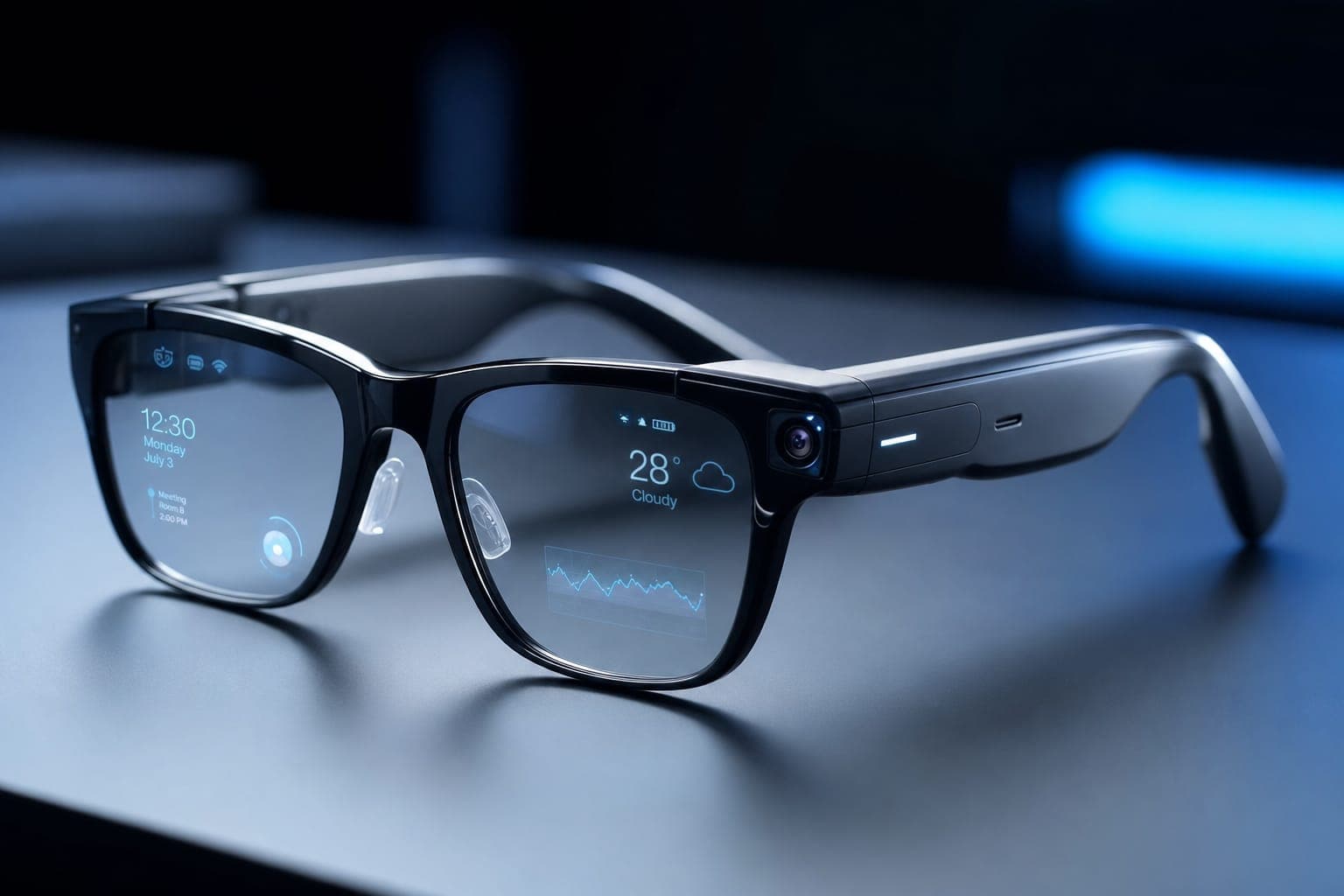
Meta Ray-Ban Display is the flagship and the conversation piece. Unveiled at Connect 2025 and on sale September 30 for 799 dollars, it adds a full-color screen embedded in the right lens—600 by 600 pixels, a 20-degree field of view, up to 5,000 nits of brightness, and a 90Hz refresh rate. It ships with the Meta Neural Band, an EMG wristband that reads the electrical signals of your finger muscles so you can navigate with subtle pinches and swipes, no touching the glasses required. Demand outran supply through the holidays, and Meta has said availability expands to Canada, France, Italy, and the UK in early 2026.
Here's how the lineup stacks up at a glance:
| Model | Price | Camera | Display | Battery (glasses) | Best for |
|---|---|---|---|---|---|
| Ray-Ban Meta Gen 1 | from 299 dollars | 12MP, 1080p video | None | about 4 hours | Bargain hunters |
| Ray-Ban Meta Gen 2 | from 379 dollars | 12MP, 3K video | None | up to 8 hours | Most people |
| Oakley Meta HSTN / Vanguard | 399 to 499 dollars | 12MP, 3K video | None | up to 8-9 hours | Athletes |
| Meta Ray-Ban Display | 799 dollars | 12MP, 3x zoom | 600x600, one eye | about 6 hours mixed use | Early adopters |
What It's Actually Like to Wear Them
The everyday experience of the camera models is built on three pillars, and all three have matured nicely.
The camera is the killer feature, full stop. First-person photos and 3K video of your kid's soccer goal, a dog sprinting at the beach, the view from a hike—captured in the moment you're living it, hands free. The quality won't replace your phone's main camera in low light, but the perspective is something a phone literally cannot do.
The audio is the sleeper hit. Open-ear speakers sit above your ears, leaving them uncovered, and they're shockingly good for podcasts, calls, and navigation prompts. Bystanders hear almost nothing at normal volumes. For anyone who finds all-day earbuds fatiguing, this alone can justify the purchase.
Meta AI is the wild card that improved the most in the past year. Say "Hey Meta" and you can ask what you're looking at, get a plaque translated, identify a plant, or ask for a recipe based on what's in your fridge. Live translation now handles conversations in a handful of languages, and a live AI mode can keep the camera engaged in an ongoing session so you can ask follow-up questions about your surroundings. It still misfires—wrong answers delivered with total confidence, the occasional "I can't help with that"—but when it lands, it feels like the personal AI assistant future arriving ahead of schedule.
The Display model layers a genuinely new interaction on top: a glanceable screen for messages, navigation arrows, a camera viewfinder, captions, and Meta AI answers you can read instead of hear. The Neural Band takes a day to stop feeling like a magic trick and another day to feel inevitable—a barely-there pinch to select, a thumb swipe along your finger to scroll. Time named it one of the best inventions of 2025, and the praise is deserved even if version one has rough edges: the display is in one eye only, the field of view is modest, and 69 grams is noticeably heavier than regular glasses.
Battery, Comfort, and the Other Fine Print
No wearable review survives contact with a full day, so let's be precise. The Gen 2 camera glasses genuinely get through a normal day of intermittent use—the rated 8 hours assumes a mix of audio, captures, and AI queries, and heavy video shooting will drain them much faster. The case-charging habit becomes second nature, like topping up earbuds.
The Display is hungrier: Meta rates it at 6 hours of mixed use, and leaning on the screen for navigation or messaging pulls that down. The Neural Band, rated at 18 hours, comfortably outlasts the glasses. If your mental model is "smartphone replacement," recalibrate—these are companions, not substitutes. You'll still carry your phone, and the glasses tether to it for connectivity.
Comfort is better than skeptics assume. The Gen 2 frames weigh about as much as chunky acetate sunglasses, and prescription lenses are available across the lineup, including Transitions options that make indoor-outdoor wear practical. People with very small faces or very strong prescriptions should try before buying.
The Privacy Question Nobody Should Skip
Let's not pretend this part away: these are cameras and microphones on your face, sold by Meta. The glasses signal recording with an outward-facing LED, and tampering with it disables capture—but in bright sunlight, from across a room, plenty of people will never notice it. A widely covered demonstration by two Harvard students in late 2024 showed how glasses-captured faces could be chained with public search tools to pull up strangers' names and addresses in seconds, a stunt designed to show how thin the social protections really are.
There's also the data side. In 2025 Meta updated its policies so that voice interactions with Meta AI are stored by default to improve its models, with deletion controls but no full opt-out short of not using the assistant. And the more useful the AI becomes—remembering what you saw, where you parked, what you read—the more intimate the data flowing through it. None of this is hidden, but it's a real trade, and it's one reason we'd encourage anyone buying in to read up on the broader biometric privacy landscape and set their retention controls on day one.
Social norms are evolving fast, though. Gyms, locker rooms, and some bars have posted no-smart-glasses policies; most public spaces have shrugged. The "Glasshole" stigma never re-materialized, largely because the glasses look normal and most owners use them like a GoPro-meets-AirPods rather than a surveillance rig. Whether that equilibrium holds as display glasses make screen-checking invisible is one of 2026's open questions.
How Meta Ray-Ban Smart Glasses Compare to the Competition
Meta isn't alone anymore, but it is dominant—analysts estimate Meta's lineup accounted for the overwhelming majority of AI glasses sold in 2025, and the category itself roughly tripled. Still, the alternatives are worth knowing.
- Even Realities G1 and similar display-first glasses skip cameras entirely in favor of discreet monochrome heads-up text—appealing if the camera is exactly what you don't want.
- Xreal One and other tethered AR glasses are a different species: virtual monitors for movies and work, now under 500 dollars, but meant for sitting down, not walking around.
- Solos and RayNeo offer credible camera-and-audio glasses, often cheaper, with weaker AI integration.
- Google and Samsung loom largest. Android XR arrived in late 2025 inside Samsung's Galaxy XR headset, and Google has announced eyewear partnerships with Warby Parker and Gentle Monster, with Gemini-powered glasses expected to reach consumers after early developer previews. Apple, as ever, says nothing while rumors swirl.
The honest summary: if you want AI glasses you can buy today that just work, Meta's ecosystem is a generation ahead on polish, retail presence (you can demo the Display at Best Buy, LensCrafters, Sunglass Hut, and Ray-Ban stores), and frame styles—over 150 combinations across the Gen 2 line. The serious competition arrives over the next 18 months.
Who Should Buy Which—and Who Should Wait
After months of daily use, here's my buying advice, sorted by person.
- Buy the Ray-Ban Meta Gen 2 if you take lots of photos of kids, pets, or travel; you live in earbuds and want your ears back; or you're simply curious about ambient AI. At 379 dollars it's the best value in the category and the safest recommendation in wearables right now.
- Buy the Oakley Meta if you run or ride and want capture plus coaching prompts without a chest mount.
- Buy the Meta Ray-Ban Display if you're an early adopter who wants to live in the future and can tolerate version-one compromises. The Neural Band alone is worth experiencing—it's the most novel input device since the touchscreen.
- Wait if you want true augmented reality—persistent 3D objects anchored in the world, both eyes, wide field of view. That device doesn't exist at consumer prices yet. Today's Display model is a heads-up display, not the holographic overlay we explored in Step into the Future: Virtual and Augmented Reality Tech. Meta's Orion prototype points there, but it remains a prototype.
The Takeaway: The Form Factor War Is Over
Strip away the spec sheets and something bigger is visible here. The smartphone has owned personal computing for nearly two decades, and every challenger—smartwatches, voice speakers, VR headsets, AI pins—has ended up orbiting it rather than replacing it. Glasses are the first form factor that plausibly sits between you and your phone all day, seeing what you see and hearing what you hear, which is exactly why every major tech company is now racing to put a computer on your nose.
Meta got there first with something people actually want to wear, and the sales curve—millions of units and accelerating—suggests the mainstream is ready. The challenges are real: battery physics, privacy norms, AI reliability, and the unsolved problem of true AR displays. But the direction of travel is no longer in doubt.
The key takeaway: Meta Ray-Ban smart glasses are the rare first-mover product that's both a great gadget today and an obvious foundation for tomorrow. If you've been waiting for a sign that wearable face computers are finally real, this is it—just go in with your eyes open about what Meta gets in return.