The Phone Call That Sounds Exactly Like Your Kid
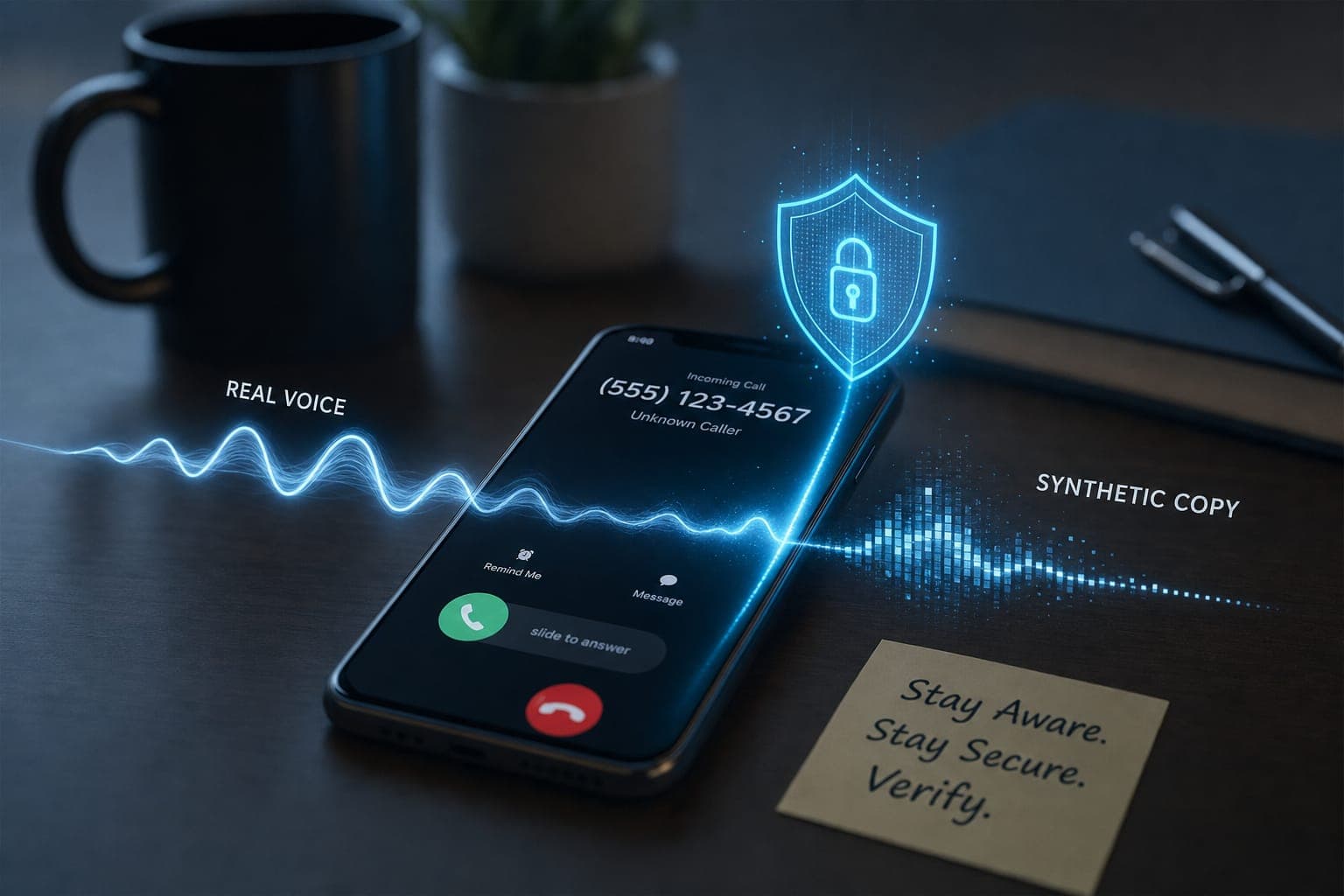
The phone rings. It's your daughter's voice, and she's crying. There's been an accident, she says, and she needs money wired right now. Every instinct tells you it's real—because the voice is real. Except it isn't her. It's an AI voice clone, built from a few seconds of audio scraped from her social media, and it's the centerpiece of one of the fastest-growing fraud categories in the world. AI voice cloning scams have moved from sci-fi premise to everyday threat, and the technology behind them is now cheap, fast, and disturbingly convincing.
Here's the good news up front: the defenses against these scams are simple, free, and nearly bulletproof once you put them in place. The scammers are counting on you not knowing the playbook. By the end of this article, you will.
How AI Voice Cloning Actually Works
Modern voice synthesis models don't need hours of studio-quality recordings. They need a sample—and a short one at that. Researchers at McAfee found that just three seconds of audio was enough to produce a clone with an 85 percent voice match, and a handful of clips pushed that to 95 percent. Think about how much of your voice already lives online: Instagram stories, TikTok videos, podcast appearances, voicemail greetings, even that conference talk from 2023.
The underlying technique is the same family of generative AI that powers legitimate text-to-speech products. The model analyzes the pitch, cadence, accent, and vocal quirks in a sample, then generates brand-new speech in that voice saying anything the operator types. Legitimate uses are genuinely valuable—voice banking for ALS patients, audiobook narration, game development. But the same capability, pointed at fraud, becomes a weapon.
What changed recently isn't the science—it's the accessibility. Voice cloning that required a research lab in 2020 now runs through consumer-grade web tools, some free, some costing a few dollars a month. There's no technical skill required. A scammer pastes in a clip, types a script, and presses play.
The Three Scam Patterns Behind Most AI Voice Cloning Scams
Nearly every voice cloning fraud follows one of three templates. Learn these, and you'll recognize the shape of the attack even when the details change.
The family emergency scam. This is the AI-supercharged version of the classic "grandparent scam." The caller is your grandchild, child, or sibling—in jail, in a car accident, kidnapped, or stranded abroad—and needs money immediately. The Federal Trade Commission warned as far back as 2023 that scammers were using AI to enhance family emergency schemes, often pairing the cloned voice with a second "lawyer" or "police officer" who handles the payment instructions. The fake kidnapping variant is the cruelest: screaming in the background, a threatening voice taking over the call, and demands for ransom via wire transfer or crypto before you can think.
CEO and executive fraud. In the corporate version, an employee in finance gets a call—or a voicemail—from the "CEO" authorizing an urgent, confidential transfer. The pattern dates back to 2019, when criminals used AI-generated audio of a chief executive's voice to trick a UK energy firm into wiring roughly 220,000 euros, one of the first publicly reported cases of its kind. It has only escalated since: in early 2024, engineering giant Arup lost about 25 million dollars to a deepfake video conference in which everyone on the call except the victim was AI-generated. Voice is usually the entry point; urgency and authority do the rest.
Verification and account-takeover scams. A subtler pattern targets your bank or your accounts directly. Scammers use a cloned voice to impersonate you to customer service lines, or impersonate your bank to you, harvesting one-time passcodes along the way. As voice authentication spreads, so does the incentive to defeat it—a problem we covered in Biometrics: Keep Your Identity Secure.
What the Numbers Say
The scale here is sobering. McAfee's global survey found that one in four adults had either experienced an AI voice scam or knew someone who had—and among those who got a message from a voice clone, 77 percent lost money. Industry tracking by Resemble AI put global losses from deepfake-enabled fraud at more than 200 million dollars in the first quarter of 2025 alone, with audio deepfakes a leading vector.
Zoom out and the broader context is worse. The FTC reported that consumers lost 12.5 billion dollars to fraud in 2024, a 25 percent jump in a single year, with imposter scams the most-reported category. The FBI's Internet Crime Complaint Center tallied 16.6 billion dollars in reported losses that same year. Voice cloning is a slice of those totals, but it's the slice growing fastest—and regulators have noticed. In February 2024, the FCC ruled that AI-generated voices in robocalls are illegal under the Telephone Consumer Protection Act, a move prompted in part by the fake Biden robocall that targeted New Hampshire voters that January.
Two things make these numbers undercounts. First, fraud is chronically underreported—embarrassment keeps victims quiet. Second, when a voice clone is convincing, many victims never realize AI was involved at all. They just know they got a call from "their son."
Your Defense Playbook Against AI Voice Cloning Scams
The beautiful thing about defending against voice cloning is that the scam's strength—a perfect voice—is irrelevant once you stop treating voice as proof of identity. Here's the layered defense, from most to least important.
1. Set a family safe word today. Pick a word or phrase that your family would never post online—not a pet's name, not a birthday. If anyone calls claiming to be family in an emergency, ask for it. The FTC's own guidance on fighting back against harmful voice cloning endorses exactly this approach. A scammer with a flawless clone of your daughter's voice still can't answer a question only your daughter knows. Make it a two-minute conversation at your next family dinner, and include the grandparents—they're the most targeted group.
2. Hang up and call back. This single habit defeats nearly every voice scam. No matter how real the voice sounds, end the call and dial the person back on a number you already have saved. Scammers spoof caller ID routinely, so an incoming call "from" your son's number proves nothing—but an outgoing call to his real number does. If you can't reach them, try another family member before you even think about sending money.
3. Recognize the pressure tactics. Every variant of this scam shares the same emotional architecture:
- Urgency — it must happen right now, before you can verify
- Secrecy — don't tell Mom, don't tell the bank, this is confidential
- Untraceable payment — wire transfer, gift cards, cryptocurrency, or a courier picking up cash
Any one of these is a yellow flag. Two or more is a fire alarm. No legitimate emergency, and no legitimate executive, ever requires payment by gift card.
4. Use bank and workplace protocols. For businesses, the fix is procedural: require dual authorization for wire transfers above a threshold, and mandate callback verification on a known number for any payment instruction received by phone, voicemail, or video call—no exceptions, even for the CEO. Many banks now offer verbal passwords on accounts and can flag out-of-pattern transfers; ask yours what protections are available. These process-level defenses echo the broader principles in Armor Up: The Battle Against Cyber Attacks.
5. Shrink your audio footprint. You can't take your voice off the internet entirely, and you shouldn't have to. But it's worth setting social accounts to private where possible, being thoughtful about posting long voice-heavy videos publicly, and replacing your personal voicemail greeting with a default robotic one. Less raw material means lower-quality clones.
Can You Hear a Voice Clone? Mostly, No
A few years ago, you could often catch synthetic audio by ear: flat emotional affect, odd pacing, breathing that didn't quite land. The best current clones have largely erased those tells, especially over a phone line, where compression hides artifacts. Some giveaways still show up—unnatural pauses while the scammer types a response, a voice that won't engage in genuine back-and-forth, background noise that loops—but you should treat your ear as unreliable.
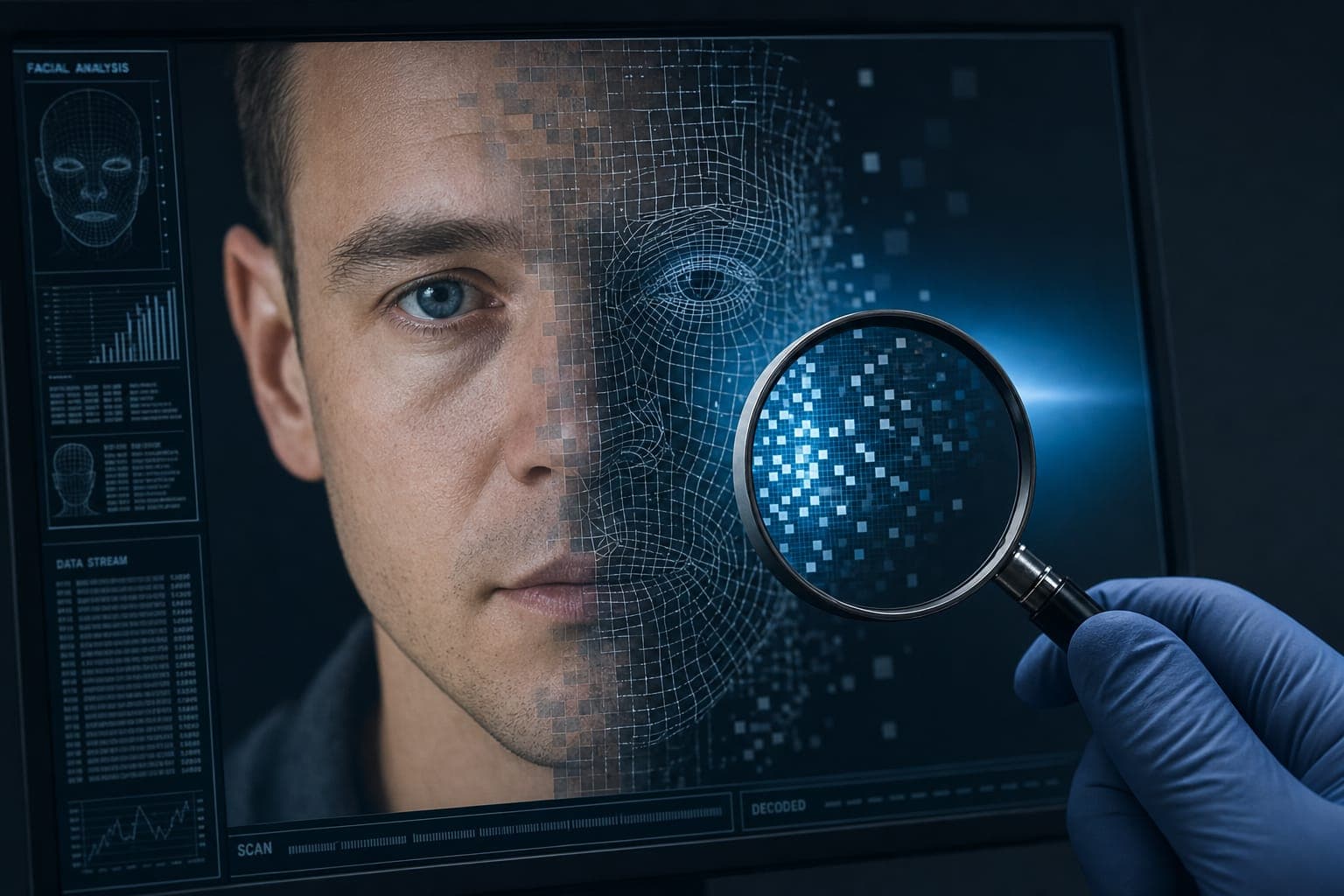
That's not defeatism; it's strategy. The same lesson applies to AI-generated video and images, which we break down in Deepfakes Explained: How to Spot AI-Generated Content. Detection tools exist and are improving—the FTC even ran a Voice Cloning Challenge in 2024 to accelerate them—but in the moment, on a live call, you won't have a detector handy. Verification beats detection every time. Don't try to judge whether the voice is real. Judge whether the situation is real.
If You've Been Targeted: A Quick Comparison of What to Do
Speed matters enormously after an attack. Here's the triage, depending on where you are in the timeline.
| Situation | What to do | Why it matters |
|---|---|---|
| Suspicious call in progress | Hang up. Don't say "yes" or confirm details. Call the real person back. | Ends the social engineering; avoids giving scammers more voice samples or confirmations |
| Money sent in the last hours | Call your bank or payment app immediately and request a recall; then file at ReportFraud.ftc.gov and IC3.gov | Wire recalls and fraud holds are time-sensitive—same-day action dramatically improves recovery odds |
| Gift cards shared | Contact the card issuer with card numbers and receipts | Issuers can sometimes freeze unspent balances |
| Your own voice was cloned | Alert family, employer, and bank that calls in your voice may be fake | Inoculates the people most likely to be targeted next |
| Ongoing threats or fake kidnapping | Call local police and the FBI field office | Real law enforcement can quickly confirm the "kidnapped" person is safe |
One more step that's easy to skip: report it even if you lost nothing. Reports to the FTC at ReportFraud.ftc.gov and to the FBI's IC3 are how these schemes get mapped, prosecuted, and built into the warnings that protect everyone else.
The Bigger Picture: Trust in the Age of Synthetic Media
It's worth being honest about what this moment represents. For all of human history, recognizing a loved one's voice was reliable proof of identity. That era is over, and it isn't coming back. The same generative AI driving genuinely exciting advances—from accessibility tools to a genuine creative renaissance—has permanently changed what a phone call can prove.
But pessimism isn't warranted either. Society has absorbed shifts like this before. We learned that an email from a Nigerian prince isn't real, that caller ID can lie, that a padlock icon matters. Regulators are moving, carriers are deploying AI-detection at the network level, and the defensive playbook—safe words, callbacks, payment skepticism—is genuinely effective and costs nothing. The vulnerability isn't the technology. It's the window of time before people update their instincts.
So close that window in your own family this week. Set the safe word. Explain the callback rule to your parents. Agree that no one in your family will ever ask for gift cards in an emergency.
The key takeaway: a voice is no longer proof of identity—but a process can be. Verify the situation, never the sound, and even a perfect clone of someone you love becomes just a stranger reading a script.